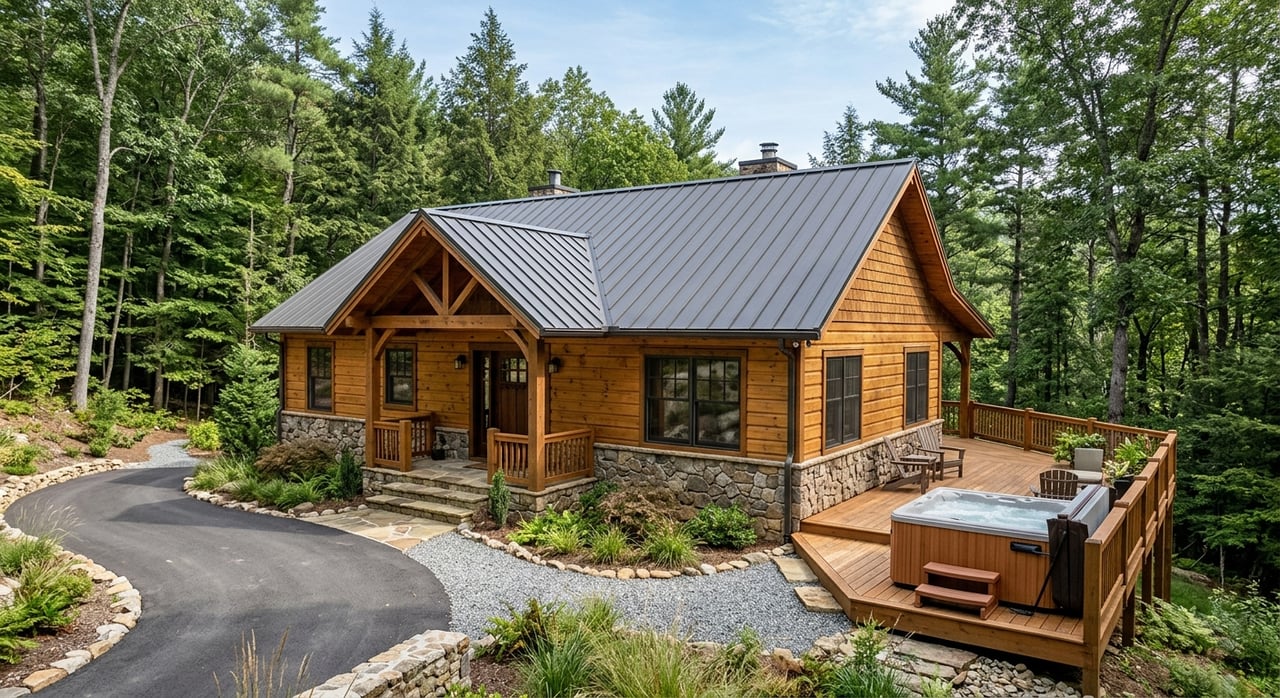
Wondering whether a Sevierville cabin could be a strong short-term rental? You are not alone. In a market shaped by Smoky Mountain tourism, it is easy to see big revenue numbers online and assume every cabin performs the same way. The truth is that rental potential depends on a few local factors that can quickly change your estimate. This guide walks you through how to build a smarter, more realistic number before you buy. Let’s dive in.
Start With Sevierville Demand
Sevierville cabin rentals benefit from one of the strongest tourism engines in Tennessee. Great Smoky Mountains National Park recorded 11,527,939 recreation visits in 2025, after 12.2 million visits in 2024, and visitors spent an estimated $2.2 billion in nearby gateway communities, according to the National Park Service. That level of visitation helps explain why short-term rentals remain a major part of the local housing market.
Tourism strength is not limited to the park alone. The Tennessee Department of Tourist Development reported $3.851 billion in direct visitor spending in Sevier County in 2023, ranking it third in the state. Sevierville also benefits from its location near the park, I-40, shopping, and event venues, as highlighted on the City of Sevierville website.
What does that mean for you? It means the area has real, proven visitor demand. But strong tourism alone does not tell you what one specific cabin can earn.
Use Market Averages Carefully
A good estimate starts with broad market data, but it should never end there. AirDNA’s public Sevierville market overview shows 13,203 active listings, 55% occupancy, $376.6 average daily rate, $51.4K annual revenue, and $201.9 RevPAR.
Those numbers are useful because they give you a market baseline. They also show that Sevierville has a large and active short-term rental inventory, with 98% of listings classified as entire homes and 52% offering 3 bedrooms or more. In other words, family-size cabins are a major part of the local rental mix.
Still, averages can hide a lot. A 2-bedroom cabin with limited parking and steep access should not be projected the same way as a 4-bedroom property with easy access and a layout built for larger groups.
Check Seasonality Before You Estimate
One of the biggest mistakes buyers make is using one annual average and treating it like a steady monthly result. Sevierville is a seasonal market. The National Park Service reported that in 2023, June through October were the busiest months, with each month topping 1 million visits.
That seasonality matters because occupancy and rates often rise and fall during the year. AirDNA’s public Sevierville page includes a monthly occupancy history chart, which is a better way to think about timing than a single annual number. If you plan to buy a cabin, use annual averages as a starting point, then pressure-test them against peak and slower periods.
Confirm City or County Rules First
Before you spend much time on revenue projections, confirm where the cabin sits. This is one of the most important first steps because rules, permits, and taxes differ depending on whether the property is inside Sevierville city limits or in unincorporated Sevier County.
Inside city limits, the City of Sevierville short-term rental rules require an annual operational permit tied to life-safety inspection and code compliance. Zoning rules also apply, including parking standards and district-specific limits on short-term rental use.
In unincorporated areas, Sevier County requires its own permit. The current Sevier County short-term rental application shows a $250 fee for occupancy of 12 or fewer, plus $25 for each occupant above 12, along with occupancy and life-safety requirements.
If you skip this step, your estimate may look fine on paper but fail in practice.
Understand Taxes Before Calculating Net Income
Gross revenue is only part of the story. Your actual income depends on taxes, permit costs, and operating expenses.
Inside the city, Sevierville levies a 3% lodging tax on stays under 30 days, according to the city’s tax information page. Tennessee also applies sales tax rules to short-term rentals, and the Department of Revenue guidance noted on the city page explains that short-term rental marketplaces collect local occupancy tax for platform bookings.
That means your top-line rental estimate should not be confused with your net income. Even before you factor in cleaning, utilities, maintenance, insurance, and management, local taxes can affect the number in a meaningful way.
Focus on the Right Property Variables
In Sevierville, basic comfort features do not separate one cabin from the market as much as you might think. AirDNA’s public data shows that air conditioning, internet, kitchens, and heating are already common across listings. Since those basics are close to standard, your estimate should focus more on the features that actually move performance.
The most important variables often include:
- Bedroom count
- Maximum allowed occupancy
- Parking count
- Road access and ease of arrival
- Floor plan and group-friendly layout
- Whether the amenity mix matches competing cabins
This matters because larger group cabins are common in Sevierville, and local rules connect usable capacity to real-world limits. The Sevierville zoning ordinance uses bedroom-based parking standards, and county permitting asks owners to verify maximum occupancy from the certificate of occupancy.
Compare the Cabin to the Real Comp Set
Once you know the rules and have a market baseline, the next step is to compare the cabin to the right type of listing. This is where many estimates get too optimistic.
A solid comp set should match the property as closely as possible in:
- Bedroom count
- Sleeping capacity
- Parking
- Availability pattern
- Access quality
- General layout and use case
For example, a cabin meant for family groups should be compared against similar family-group inventory, not against every active listing in Sevierville. AirDNA’s public data shows most listings use a 2- to 3-night minimum stay and that 68% are available 271 to 365 nights a year, which suggests many are operated as full-time rentals rather than occasional second homes.
That context matters if you plan to use the cabin yourself. Personal-use time may affect availability and, in turn, annual revenue.
Build a Simple Rental Estimate
You do not need a perfect spreadsheet to get started. You just need a realistic framework.
Here is a simple public-data workflow based on the sources above:
- Confirm demand trends using the National Park Service visitation data and Sevier County tourism spending data.
- Check jurisdiction to see whether the cabin is in Sevierville city limits or unincorporated Sevier County.
- Review permit and code requirements before assuming the home can operate the way you want.
- Use Sevierville market averages from AirDNA as a starting point, not a final answer.
- Adjust for seasonality by looking at monthly occupancy patterns rather than annual averages alone.
- Compare the property to similar cabins based on size, occupancy, parking, and access.
- Subtract taxes and ownership costs to move from gross revenue to a more realistic net estimate.
This approach will not replace a full property-specific analysis, but it will give you a more defensible estimate than relying on one headline number.
Use Nearby Markets for Context Only
You may also see buyers compare Sevierville to nearby Smoky Mountain markets. That can be helpful for context, but it should not replace local comps.
AirDNA’s public pages show nearby Gatlinburg at 54% occupancy and $345.7 ADR, while Sevierville sits at 55% occupancy and $376.6 ADR on its public overview. That tells you Sevierville is competitive within the broader Smokies market, but one specific cabin still rises or falls based on its own setup.
Questions To Ask Before You Buy
Before you make an offer on a Sevierville cabin, make sure you can answer these questions clearly:
- Is the property inside Sevierville city limits or in unincorporated Sevier County?
- Is a short-term rental permit already in place, or will you need to apply?
- What is the certificate-of-occupancy sleep limit?
- How many bedrooms and parking spaces does the property actually support?
- Is the access straightforward for guests year-round?
- Does the layout fit the same guest type as the properties you are using for comps?
- Have you accounted for lodging tax, sales tax treatment, permit costs, and other ownership expenses?
If any of those answers are unclear, your revenue estimate may need work.
The Bottom Line on Sevierville Cabin Rental Potential
Sevierville offers real short-term rental demand backed by national park visitation, strong county tourism spending, and a large established cabin market. That is the good news. The more important news is that rental potential is never just a market average.
The best estimate comes from combining public demand data, local permit and tax rules, and a property-specific comp review. When you look at all three together, you can make a much more informed decision about whether a cabin fits your investment goals.
If you want help evaluating a cabin, comparing Sevierville areas, or narrowing down investment-friendly properties in the Smokies, connect with Deanna Dellinger. You will get local insight, clear guidance, and a grounded perspective on what a property may really offer.
FAQs
How do you estimate rental potential on a Sevierville cabin?
- Start with Sevierville market averages, then adjust for seasonality, local rules, occupancy limits, parking, access, and how closely the cabin matches comparable rentals.
What public data should you use for Sevierville cabin estimates?
- The most useful public sources in this market are National Park Service visitation data, Tennessee tourism spending data, Sevierville or Sevier County permit rules, and AirDNA’s Sevierville market overview.
Do Sevierville city limits affect cabin rental income estimates?
- Yes. Properties inside Sevierville city limits may face different permit, zoning, parking, and lodging tax rules than properties in unincorporated Sevier County.
What taxes affect short-term rental income in Sevierville?
- Inside Sevierville, stays under 30 days are subject to a 3% lodging tax, and Tennessee short-term rentals are also subject to state sales tax rules.
Does bedroom count matter for Sevierville cabin income?
- Yes. Public market data suggests larger cabins play a major role in Sevierville, and bedroom count can affect occupancy, parking standards, guest capacity, and comp selection.
Is Sevierville seasonal for cabin rentals?
- Yes. Smoky Mountain tourism is seasonal, and National Park Service visitation data shows the busiest period typically runs from June through October.