Search Eagles Ridge Resort's cabin rentals and you'll find a six-bedroom, six-bathroom cabin called Black Beary Ridge, complete with a separate game room, wet bar and pool table. On one page of the booking site, that cabin is marketed as sleeping up to 20 guests. On another page of the same site, the identical cabin, same bedrooms, same bathrooms, same game room, is marketed as sleeping up to 16. Same physical cabin. Same rental company. Two different numbers.
Here's the number an investor actually needs before writing an offer: The Short Term Shop says Pigeon Forge caps legal short-term rental occupancy at 12 guests per property under its standard permit, using a formula of two guests per bed and two beds per room. A cabin marketed to sleep 20 doesn't get to rent to 20 people just because the furniture allows it. It gets permitted the same way a cabin marketed to sleep 12 does, and if the owner wants to legally exceed that ceiling, the city has a separate and more expensive path for it.
That gap between the marketing number and the permit number is the thing worth understanding before you tour a single cabin.
The sleep count is a furniture decision, not a permit decision
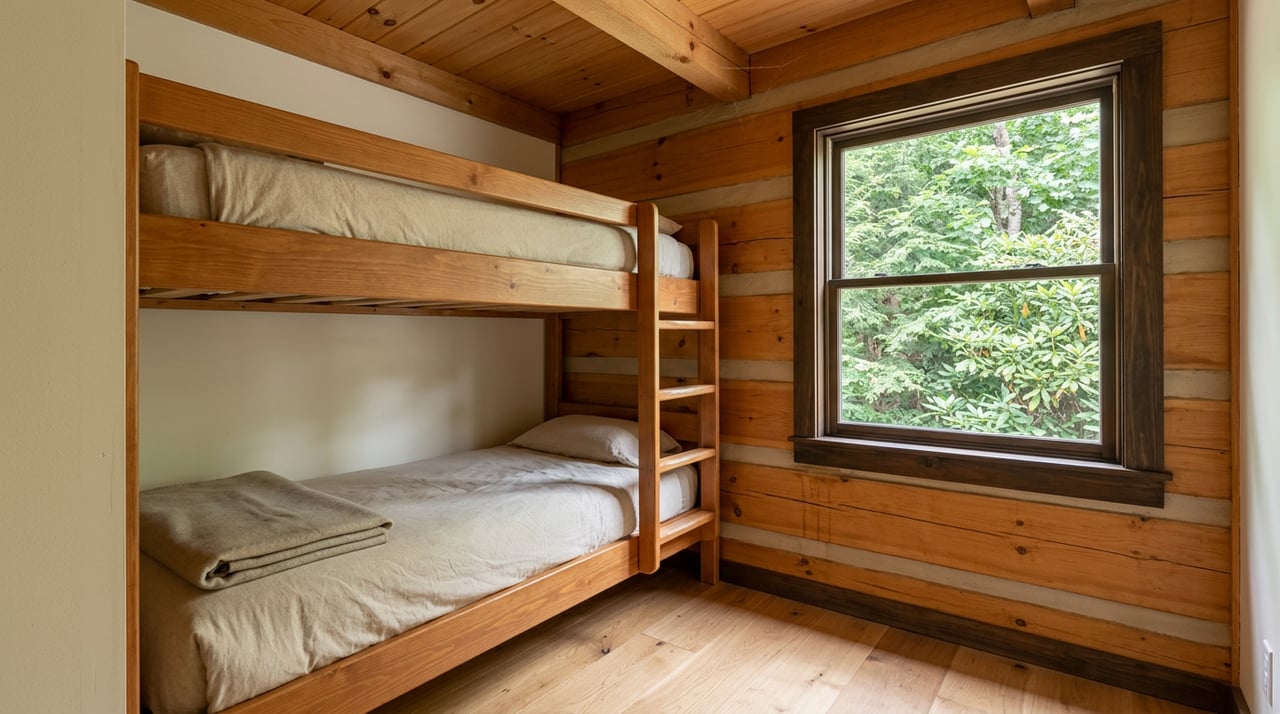
A cabin's marketed capacity may reflect how many people could theoretically fit, such as a queen sleeper sofa in a game room, a set of bunks in a loft, or a daybed in a den. That marketed capacity is separate from what the city of Pigeon Forge will authorize on a short-term rental permit.
The occupancy formula that actually governs the permit is two guests per bed, two beds per room, with an overall property cap of 12 people. A three-bedroom cabin can reach that ceiling on paper. A six-bedroom cabin marketed to sleep 20 is, for standard permitting purposes, treated no differently than one marketed to sleep 12, unless the owner pursues the higher tier.
What the higher tier actually costs
Pigeon Forge does have a path for cabins that legitimately want to license above 12 guests, but it isn't free and it isn't simple. The annual STRU permit runs $250 for properties at or under the 12-guest cap. Above that, it becomes $250 plus $25 for every additional guest, and SkyRun says properties sleeping 13 or more guests face significantly higher fire code requirements, including full sprinkler systems.
A six-bedroom cabin marketed to sleep 20 doesn't clear that bar by having enough beds. It clears it by having enough fire suppression, and that's a renovation cost, not a listing description.
This is the detail that separates an accurate pro forma from an optimistic one. A cabin listing in Black Bear Ridge Resort, a separate cabin subdivision reached off Lost Branch Road via Wears Valley Road, pairs "Sleeps 16+!" with a projection of over $150,000 in annual revenue. The pairing makes it important to verify the cabin's permitted occupancy and fire-suppression status before relying on its revenue projection. If the cabin does not have the higher occupancy tier, the projected income at that headcount may not be legally available.
Two cabins, same bedroom count, different ceiling
Set the real listings aside for a second and look at the mechanism in its simplest form, using two hypothetical six-bedroom cabins priced similarly, both in established Pigeon Forge resort subdivisions.
| Cabin A | Cabin B | |
|---|---|---|
| Bedrooms | 6 | 6 |
| Marketed sleep count | 12 | 20 |
| Legal occupancy at standard STRU permit | 12 | 12 (unless upgraded) |
| Additional cost to license for 20 | None needed | Higher-tier permit fee, plus likely fire suppression upgrade |
| Revenue this year assumes | 12-guest bookings | 20-guest bookings |
Cabin A's marketing matches its permit. Cabin B's marketing is ahead of what the city will currently authorize, unless the current owner has already paid for the sprinkler upgrade and the higher occupancy tier. Two cabins that look identical on a spec sheet can carry very different real ceilings, and the only way to know which one you're buying is to ask for the actual STRU permit and its stated occupancy, not the number on the listing photo.
Zoning decides whether you get to have this conversation at all
Occupancy math only matters if the cabin is allowed to operate as a short-term rental in the first place, and Pigeon Forge's zoning rules add a second layer of friction that has nothing to do with bed count.
According to Airbtics, Pigeon Forge has restricted new short-term rental development in R-1 residential districts. Properties in those zones can still operate as STRs, but only if they were already doing so, with a valid permit, on or before August 13, 2018. That date isn't a rounding error or an old rule that's since been relaxed. It's still the operative cutoff.
Before assuming a cabin can be rented the way the seller has been renting it, confirm both the zoning district and whether the property was operating with a valid permit on or before August 13, 2018.
The numbers that move with the occupancy math
Two more figures scale with how a cabin is classified and used, and neither shows up in a listing description.
The tax stack. Guests pay a combined lodging and sales tax of roughly 12.75% in Sevier County: 9.75% in state and local sales tax plus a 3% county lodging tax, split evenly between tourism infrastructure and education according to the Sevier County Trustee's lodging tax page.
The property tax classification. Under Tennessee's Short-Term Rental Unit Act, a property used as an STR and not occupied as the owner's primary residence is assessed at a 40% commercial rate instead of the standard 25% residential rate. That's not a Pigeon Forge-specific quirk, it's statewide.
Neither of these numbers cares whether the listing said "sleeps 12" or "sleeps 20." Both attach to the property based on how it's used and classified, and both are worth confirming with a closing attorney or tax professional before you finalize a purchase, since neither is something a real estate license qualifies anyone to interpret as legal or tax advice.
What this means before you make an offer
If you're comparing cabins in Pigeon Forge for rental income potential, the marketed sleep count alone does not establish the cabin's permitted occupancy. Before you build a revenue model around it, ask three things: what does the current STRU permit actually state as legal occupancy, what zoning district is the parcel in, and, if it's R-1, was it operating with a valid permit on or before August 13, 2018, and has the seller's income history been generated within that permitted occupancy or above it. Those answers help you assess whether the cabin's rental numbers align with its permitted occupancy and income history.
A few questions worth asking directly
Does a bigger "sleeps" number always mean a bigger legal occupancy? No. The sleep count reflects furniture and floor plan. The legal occupancy reflects the STRU permit, which follows the city's two-guests-per-bed, two-beds-per-room formula capped at 12 unless the owner has paid for and passed the higher tier.
If I buy a cabin already permitted above 12 guests, does that transfer to me? Confirm this directly with the city rather than assuming it. What you're buying is a permitted property, and the specifics of how that permit history carries forward are worth verifying in writing before closing, not after.
Can I add bunk beds after closing to increase my sleep count? You can add furniture, but adding sleeping capacity beyond 12 guests means pursuing the higher occupancy tier and the fire code requirements that come with it. Increasing the marketed sleep count without increasing the legal occupancy just widens the gap this article is about.
If you're evaluating a specific cabin in Pigeon Forge and want a second set of eyes on what its permit history actually supports, that's exactly the kind of due diligence Deanna Dellinger works through with buyers before an offer goes in, not after. Reach out to get your free home valuation and a straight answer on what a cabin's numbers really mean.
This article is general information, not legal, tax or financial advice. Consult a qualified professional about your situation.