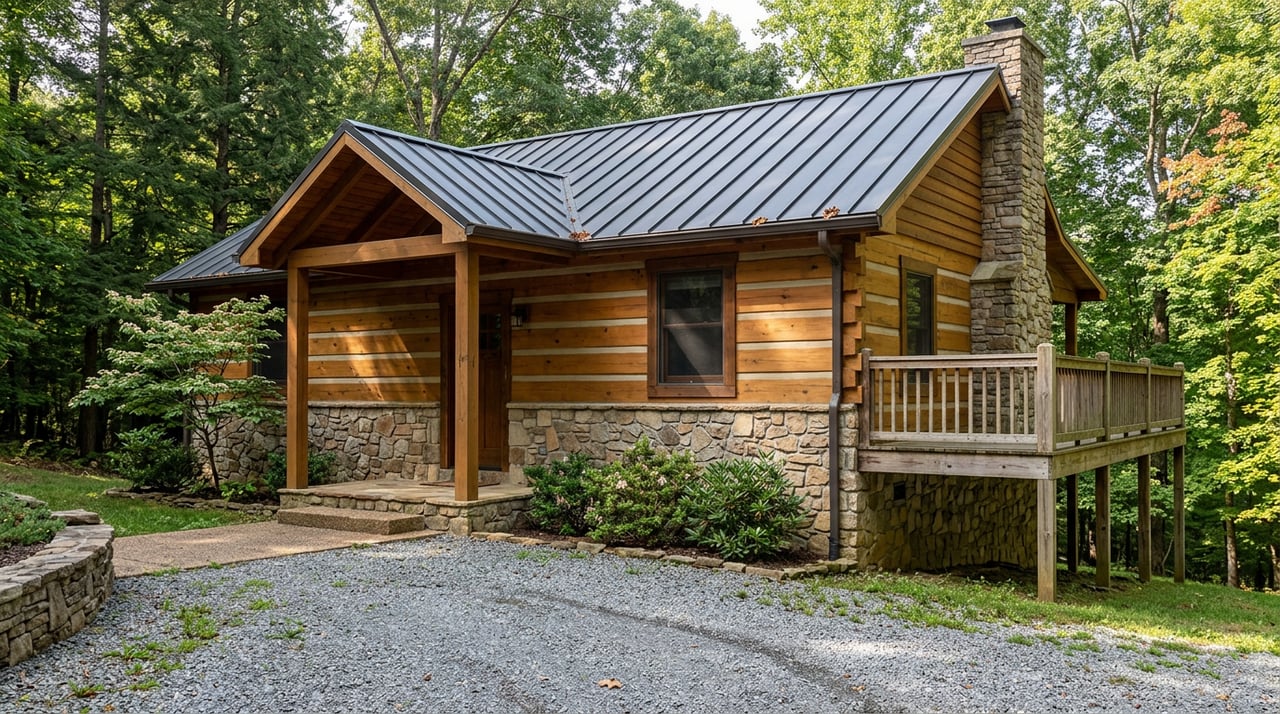
A buyer under contract on a "turnkey" Gatlinburg cabin usually pictures one clean handoff at closing. Three separate things matter at closing on a Gatlinburg short-term rental, each on its own legal track. The gap between what a buyer assumes comes with the property and what actually does is where offers get renegotiated in the final week before closing.
Three instruments, three different owners of the process
The permit that lets a cabin legally operate as a rental is issued by a government. The business license and tax registration that let the new owner collect and remit money on that rental are also issued by a government, but a different application entirely. The guest reservations already on the calendar involve arrangements with either a guest or a management company, so buyers need to ask how they will be handled.
Treat these as three doors. Walking through one does not open the other two.
The permit door looks different depending on which side of the city line you're on
Inside Gatlinburg's city limits, every short-term rental needs a Tourist Residency Permit from the city, and the base fee runs $200 for a cabin with two bedrooms or fewer, plus $75 for each additional bedroom. The application goes through the Gatlinburg Customer Service Center or by mail to City Hall, and the property has to pass a fire and safety inspection before the city issues the permit. According to GetChalet, the city does not spell out anywhere in its published process a guaranteed path for that permit to follow the property to a new owner. Whether it carries over defaults to the city's case-by-case judgment rather than a codified rule, which means a buyer who assumes the permit is theirs the day they close is assuming something the city has never actually promised in writing.
Step outside city limits into unincorporated Sevier County and the picture flips. The county's Short-Term Rental Unit Permit program, in place since January 1, 2024, has an actual named process for a change in ownership. The seller files a form called Notification of Unit Sold. The buyer files a Change of Information application. Both go to the Sevier County Fire Marshal's Office, and the county even publishes a document titled Realtor Information for Short-Term Rentals specifically so agents on both sides of a deal know the steps. If the new owner wants to raise the cabin's permitted occupancy above what the previous owner had approved, that is not automatic either. It requires its own separate application, listed on the county's site as its own step.
So unincorporated Sevier County, with its 6,500-plus registered short-term rental units, has a published process for a change in ownership. Inside Gatlinburg city limits, the permit transfer process is not codified as automatic. That is exactly the kind of detail a purchase contract should account for rather than assume.
| Inside Gatlinburg city limits | Unincorporated Sevier County | |
|---|---|---|
| Governing body | City of Gatlinburg | Sevier County Fire Marshal's Office |
| Permit name | Tourist Residency Permit | Short-Term Rental Unit Permit |
| Base cost | $200 (2 bedrooms or fewer) + $75 per additional bedroom | $250 per year, per unit |
| Transfer on sale | Not codified as automatic | Named process: seller files Notification of Unit Sold, buyer files Change of Information |
| Occupancy increase | Requires new city review | Separate application, distinct from ownership transfer |
The paperwork for a rental operator
According to The Offer Sheet, Gatlinburg requires both a city business license and a Sevier County business license, each a separate $15 registration, and the operator also has to register directly with the Tennessee Department of Revenue for a tax ID.
The booking calendar needs a closer look
The most visible part of a "turnkey" listing is usually the revenue history and the reservations already on the books for the year ahead. That calendar can take one of two forms, and buyers need to know which arrangement is involved before they write an offer.
If the seller manages the cabin independently, buyers should ask how the existing reservations will be handled.
If the cabin is under a professional management contract, its terms are worth reviewing before making an offer. According to Cabins of the Smoky Mountains, a typical Gatlinburg cabin management agreement runs on a commission around 40% of gross rental receipts. The owner is separately billed a flat monthly fee for recurring costs like hot tub chemicals and preventive maintenance. Cancellation usually requires 30 days notice from either side, and critically, any reservation already booked inside that 30-day window has to be honored under the existing terms if the management company cannot find the guest an equivalent property.
What this means before you write the offer
None of this makes buying a Gatlinburg rental cabin harder than it should be. Before writing an offer on an existing rental cabin, it is worth confirming, in writing, from the seller or listing agent:
- Whether the property sits inside Gatlinburg city limits or in unincorporated Sevier County, since that determines which permit process applies
- Whether the seller will make the purchase contingent on permit transferability rather than leaving it to assumption, particularly for a city cabin where the process is not codified
- Whether existing bookings are managed independently by the seller or are part of a professional management contract
Getting clear answers on these three points before closing, rather than after, is the difference between a cabin that starts producing income the week you own it and one that sits in a gap while permits, licenses, and management terms get sorted out.
A few questions worth asking directly
Does the seller's Tourist Residency Permit automatically become mine? Not by default inside Gatlinburg city limits. The city's process does not guarantee an automatic transfer, so this should be addressed as a contingency in the purchase agreement rather than assumed.
What paperwork does a rental operator need? Gatlinburg requires both a city business license and a Sevier County business license, and the operator must register with the Tennessee Department of Revenue for a tax ID.
What should I check if the cabin has bookings on the calendar? Check whether the seller manages the cabin independently or has a professional management contract, then review the applicable arrangement's terms.
If you are weighing a purchase like this, or you already own a Gatlinburg rental cabin and want to understand how these three pieces would actually play out for a future buyer, Deanna Dellinger works these transactions in Sevier County every week. Start with a free home valuation, and let's talk through exactly what would transfer, what wouldn't, and how to structure the contract so there are no surprises at closing.
This article is general information, not legal, tax or financial advice. Consult a qualified professional about your situation.